Selasa, 31 Januari 2012

From AdSense to SpamSense to Spam Cents

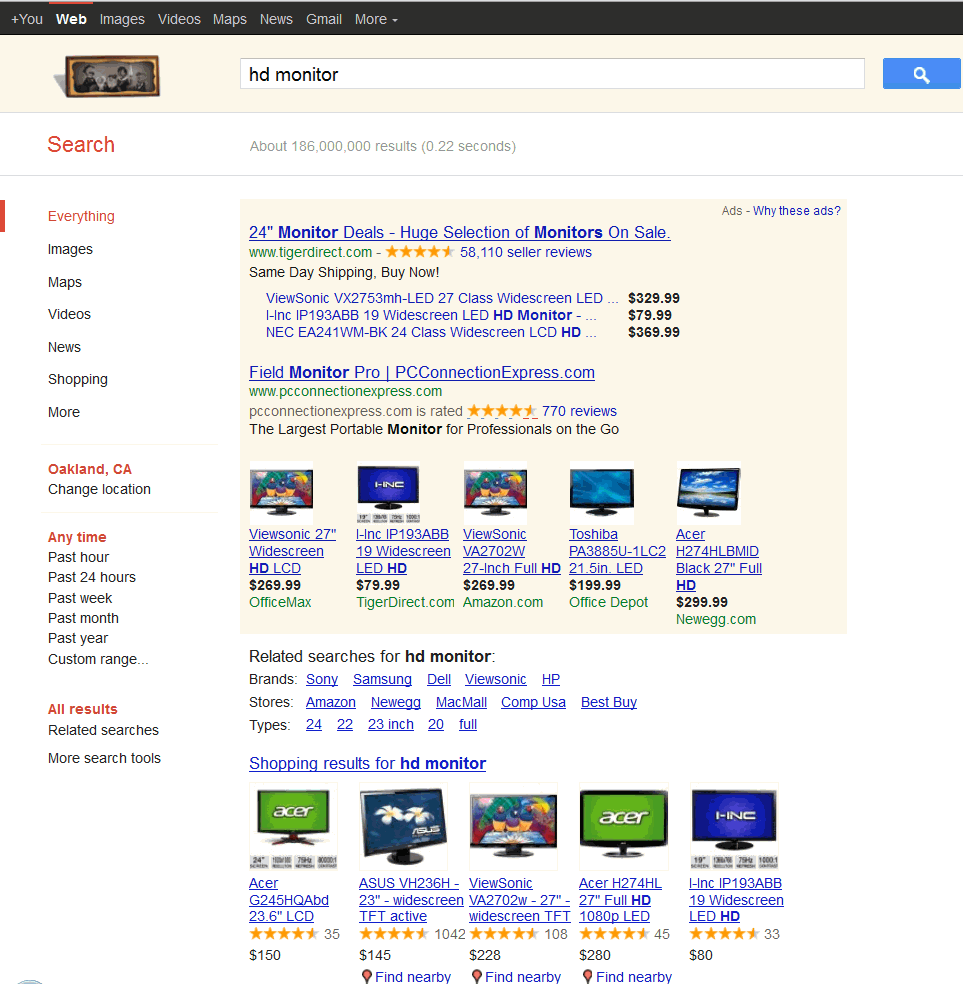
Google announced they rolled out their anti-overly-aggressive-ads algorithm. They didn't give a specific % on how much of the above the fold content can be ads, but suggest using their browser preview tool. Using that tool on Google.com's search results would of course score it as a spam site, but for some small AdSense webmasters that avoided Panda, Google may have drew first blood.

Much Quicker Updates

With a limited number of recoveries nearly a year after Panda, the first bite might seem like a big concern, however the "too many ads" algorithm updates far more frequently than Panda does:

If you decide to update your page layout, the page layout algorithm will automatically reflect the changes as we re-crawl and process enough pages from your site to assess the changes. How long that takes will depend on several factors, including the number of pages on your site and how efficiently Googlebot can crawl the content. On a typical website, it can take several weeks for Googlebot to crawl and process enough pages to reflect layout changes on the site.

And for those who got hit by Panda then tried to make up for those lower ad revenues with more AdSense ad units, they probably just got served round #2 of Panda Express. ;)

Is it Screen Layout, or Something Else?

In the past Google suggested to a nuked AdWords advertiser that more of his above-the-fold real estate should be content than ads.

However Google has such a rich data set with AdSense that I don't think they would just look at layout. If I were them I would factor in all sorts of metrics like

  • AdSense CTR
  • average page views per visitor
  • repeat visits & brand searches
  • bounce rate
  • clickstream data from Chrome & the Google toolbar (so even if you are using other ad networks, they can still sample the data)

Some sites are primarily driven off of mobile views while other sites might be seen on large monitors. When Google sees every page load & measures the CTRs, tacking actual user response is better than guestimating it.

They could come up with some pretty good metrics from those & then for any high traffic/high earning site they could manually review them to see if they deserve to get hit or not & adjust + refine the "algorithm" until those edge cases disappeared. Google's lack of credible competition in contextual & display ads means they can negotiate pretty tough terms with publishers that they feel are not adding enough value to the ecosystem.

It's Not Just Algorithms Cleaning Up AdSense

In addition to these sorts of algorithms, over the past year they have manually hit networks of sites with the doorway pages label & disabled ad serving on sites or entire accounts where they felt there was a bit too much arbitrage. One of our SEO Book members pointed me to this thread where a lot of Pakistani AdSense accounts got torched last October & another sent me a sample termination email from Google similar to this one:

Notice that in the above:

  • There was no claim of click fraud, copyright issues, or anything like that.
  • There was no claim of advertiser complaints.
  • Google offers no customer support phone number, no "you might want to work on this" advice, doesn't list which of the sites in the account they felt could be improved, and RETROACTIVELY nuked past "earnings" ... depending on where it is in the schedule that can amount to anywhere from 30 to 50+ days (I remember Teeceo mentioned how they waited until the day before the AdSense payday to smoke his stuff way back in the day to have maximum impact!)

On Google's latest quarterly earnings call they highlighted how year on year Google's revenues were up 25% but the network revenues only grew at 15%. They also explained the slower network revenue growth as being associated with improved search quality & algorithm updates like Panda.

Left unsaid in such a statement was that until those algorithms rolled out, Google admitted they funded spam. ;) The whole AdSense & content farm problem was created through incentive structures with unintended consequences.

Is the Garbage Disappearing, or Just Moving to a New Landfill?

If you track what is going on with the Google+ over-promotion (long overdue post coming on that front shortly!) or how Google is still pre-paying Demand Media to upload video "content" to Youtube, Google still may be funding the same model, but doing so while gaining a tighter control of relevancy so they can better sort good stuff from crap (when you host content & track user response you have all the metrics in the world to determine how relatively good you think it is). If they over-promote these sites then in the short run they create the same skewed business model problem.

Sure hosting the user experience makes it easier to sort the wheat from the chaff, but the other big risk here is the impact on the rest of the publishing ecosystem. There will be lots of thin spam from popular people on Google+ (anyone launched a celebrity-focused Pay-Per-Plus site yet?) & in-depth editorial content might not be economically feasible in certain categories where there literally is no organic SERP above the fold.

I will complement them on their efforts to clean up some of the worst offenses (from the prior generation of "bad incentives"). If you were hit by it, Panda was every bit as big/brutal as the famous Florida update. If this update is anything near as significant as the Panda update (in how it impacts smaller independent webmasters) then it is going to force more of them/us to move up the value chain.

That may mean pain in the short run, but (for those who take it as a wake up call to develop brand & organic non-search traffic streams) far more rewards in the longrun for those who remain after the herd is thinned.

Working for "The Company"

Larry Page's view on working for the company:

My grandfather was an autoworker, and I have a weapon he manufactured to protect himself from the company that he would carry to work. It's a big iron pipe with a hunk of lead on the head. I think about how far we've come as companies from those days, where workers had to protect themselves from the company.

I think for many SEOs the idea of starting over is painful, but the best SEOs often enjoy the forced evolution & the game of it all. They don't roll over & play dead or forget SEO. And if Google didn't put hard resets in every once in a while, then the big hedge funds would be mopping up the SERPs and cleaning our clocks with the help of Helicopter Ben.

Areas For Improvement

Of course this could be taken as a positive post toward Google (and it mostly is), but I don't want to come across as a fanboi, so I thought I should do a shout out to a couple things they still need to fix in order to be consistent:

  • If Google is going to tell people that thick deep content is needed to gain sustainable exposure then they shouldn't be ranking thin + pages in the SERPs just because it is a Google product. Even people who have *always* given Google the benefit of the doubt (full on fanbois) found the Google+ placement in the SERPs distasteful.
  • Google's AdSense is still sending out some of those automated "you are leaving money on the table" styled emails reminding publishers to use 3 ad units. If such behavior may lead to a smoke job, then the recommendation shouldn't be offered in the first place. Right below the "use 3 ad units" there needs to be a "proceed with caution" styled link (in red) that links to the recent "too many ads" post.
  • Old case studies that are no longer in line with best practices in the current market should have some sort of notice/notification added to them so new webmasters don't get the wrong idea.
  • Some of the AdSense heatmaps are roadmaps to penalization. These should have been fixed before yesterday's announcement, but if they are still up there next week then Google is willfully & intentionally trying to destroy any small business owner that follows that "best practice" advice.

Your Feedback Needed

Since this update impacted far fewer sites than the Panda update, there are fewer sample/example sites. Did any of your websites get hit? If so, how would you describe ...

  • your ad layout
  • your ad CTR
  • you mode of monetization (AdSense, other, both)
  • the level of impact on your site from the update

Source: http://www.seobook.com/spamsense

blog business advertising work from home

This Post is Sponsored by Google

That is what they say, typically at the bottom of the posts, in blog posts that equate Google Chrome to being the Internet & spread misinformation about how Chrome is good for small business.

  • some of those sites are paid posts and have live links in them to Google Chrome without using nofollow & talk about SEO in the same post as well!
  • some of those posts link to the example businesses Google was paying to have covered
  • and all the posts are effectively "buying YouTube video views" for this video youtube.com/watch?v=QFLP7HD1s7k

You can say they didn't require the links, that the links were incidental, that leaving nofollow off was an accident, etc. ... but does Google presume the same level of innocence when torching webmasters? They certainly did not to the bloggers who reviewed K-Mart & the Google reconsideration request form states:

?In general, sites that directly profit from traffic (e.g. search engine optimizers, affiliate programs, etc.) may need to provide more evidence of good faith before a site will be reconsidered.?

The Orwellian things about Google using the above strategy to market Chrome are:

  • Google has a clear pro-corporate big brand bias to their algorithms & layout (Vince & Panda updates + the part near the top of the SERPs for some searches that says "brands" as a filter type).
  • The more usage data Google collects the more stupid hoops it forces smaller businesses to jump through in order to compete, thereby further driving them under. (If small business owners didn't have enough time & resources for SEO, do they now also have time to get reviews, get local citations, deal with social stuff on Twitter + Facebook + Youtube + Google+ and a bit of SEO?)
  • Google polices how small businesses can even make income online. When K-Mart paid some small business bloggers to do sponsored posts Matt Cutts wrote a post (mattcutts.com/blog/sponsored-conversations/) about how he torched those small bloggers (while doing nothing to K-Mart) & equated that exercise to selling links that promote bogus brain cancer solutions. Yet Google Japan was already dinged for this sort of paid post activity & now Google is doing the same thing again.

The fact that Google is paying to spread that sort of misinformation about how their browser is helping small businesses is sort of like BP buying ads about doing tourism in the gulf. Only since Google destroying smaller businesses is something more abstract on virtual lands the PR propaganda campaign is much more effective, because (unlike oil washing ashore) people do not see what is not there. (The birds still die, but the black oil covered carcass isn't rotting on the beach).

Should you follow Google & buy ads on these sites? Are they christened & beyond reproach? I would sort of be afraid to buy exposure on the blogs where Google is buying coverage...if that latent public relations disaster eventually blows up in their face, they may assume others are as guilty as Google is & burn down the whole forest.

Google the dictator meet Google the marketer. You guys are going to get on well together!

Update: Danny highlighted how Google's Chrome ad buy created a lot of the low-quality filler pablum content that the Panda update was alleged to discourage.

Categories: 

Source: http://www.seobook.com/post-sponsored-google

seo media blog business

The Walmartization of the Web (Literally)

Walmart is getting much more aggressive with their online strategy:

With some 1.4 million employees on its U.S. payroll, Walmart's world is about as large as the state of Maine. That's massive by any standard, but when you consider how social media amplifies that number, it's not simply a huge group but an influential one. No small wonder, then, that the earth's largest employer is taking greater measures to motivate and mobilize its people -- and opening up more opportunities for consumer brands to also reach them along the way.

These brands can not only leverage internal resources to further build off the boost Google offers them, but they can then take that attention and sell it back off to the highest bidder:

It's not clear how much ad revenue Walmart World has made or whether MyWalmart.com will become a profit center. But the former already takes in millions of dollars annually in ads from vendors seeking an audience with Walmart employees, according to people familiar with the matter.

If Google consolidates markets too aggressively then ultimately they create competition for themselves through vertical ad networks. In some cases (say travel) Google can buy out the market plumbing & then reassert control:

Wertheimer drew some criticism when he explained that ?our airline partners were very clear? that they wouldn?t participate in Google Flight Search if online travel agency booking links were included in the core flight-search results.

But Google doesn't have that same influence over retail & each time they put the big brands front and center the more they reinforce that 3rd party dominance.

In addition to leveraging their workforce, it is also quite easy for these brands to use customer incentives to dominate social media.

Amazon.com is also carrying far more ads these days & they sell ads on 3rd party sites.

The above is another reason why Google is pushing so hard to control the second click. If they can taste the traffic again they add efficiency to their own model while introducing another layer of friction to other retailers.

When users finally manage to leave the Google click circus, Google tries to pull them back into Google with the Google Related toolbar

In the above quoted AdAge article there is some skepticism around how much a company like Walmart can get out of underpaid wage slaves:

"It's really hard when you're a person making poverty-level wages, just had your health-care premiums raised 60%, and you can only get part-time hours, to be a good ambassador for the brand, no matter how much you love it," said Jennifer Stapleton, spokeswoman for Making Change at Walmart.

However I think that skepticism is misplaced, as the less a person has the more thankful they tend to be for the little bits they do have. Most people who have nothing do not realize how systems are engineered to screw them over.

It is only when you have free time to think & are not clouded by arbitrary short-term stress that you can ponder the bigger & more uncomfortable questions in life. As long as you don't consider those uncomfortable questions it is far easier to push anything, because you don't know any better.

"The entire web has become full of garbage. The web has become almost a digital Detroit." - Roger McNamee.

If Walmart's strategy works then this ultimately will be why Google's brand-only approach to search will fall flat on its face. If this is successful I would then expect Google to put out some public relations drivel about celebrating the diversity of the web & move away from brand in the next 2 or 3 years.

In the meantime, I expect Google to keep increasing search complexity such that it's prohibitively expensive to make & market a small independent commercial website. That will force many smaller companies to live inside the Google ecosystem, with Google ranking the Google-hosted pages/products/locations for those companies, so that they can serve ads against them and get a bigger slice of the revenues.
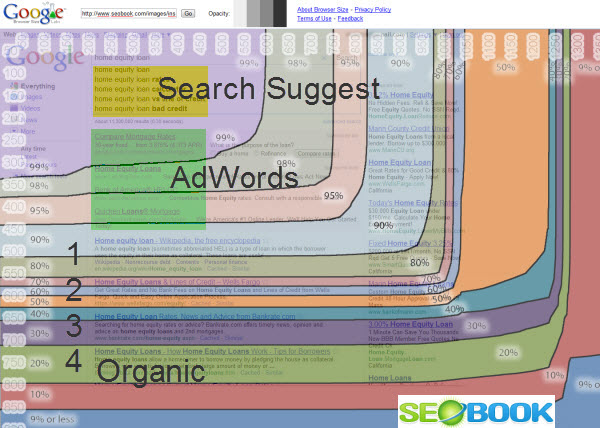
Google's ad network is far more profitable than even the lowest waged employee, as it doesn't need to be fed & is designed to be an agnostic & amoral yield optimization tool. And it is effective enough that the biggest retailers are now becoming ad networks.

Average products for average people - with ads everywhere.

Welcome to the WorldWideMart. ;)

Categories: 

Source: http://www.seobook.com/walmartization

work from home seo media blog

Online Marketing News: Google+ Search, $10 per Twitter Follower, Facebook 1 Billion Users, Foursquare Search Engine, Social ROI: No, Really!

Search, plus Your World The big news this week centers around the changes that Google has rolled out related to Google+ integration with search,�which as the tech press buzzing. �Google is aiming to bring users additional search functionality that is incorporated with their Google+ profiles. ��The official Google blog states that ?you should be able [...]

Source: http://feedproxy.google.com/~r/OnlineMarketingSEOBlog/~3/cGG9ibRLp1c/

blog business advertising work from home

Senators back bill to OK Keystone (Politico)

Senate Republicans on Monday introduced a bill that would have Congress approve the Keystone XL pipeline instead of waiting for President Barack Obama to grant a permit.

The proposal puts the senators on a similar but distinct track from House GOP leaders seeking to take control of the issue away from the White House.

Continue Reading

The Senate bill ? co-sponsored by 43 Republicans and Sen. Joe Manchin (D-W.Va.) ? would greenlight the pipeline outside of Nebraska. Inside the Cornhusker State, Nebraskan officials would have as long as they need to find an alternative route.

"We tried to address any and all concerns that have been raised," Sen. John Hoeven (R-N.D.), one of the bill's lead sponsors, told POLITICO last week. Hoeven said Congress has the authority under the Constitution's Commerce Clause to oversee commerce with foreign powers.

The Congressional Research Service this month ruled that Hoeven's bill ? and by extension a similar bill introduced Tuesday by Rep. Ted Poe (R-Texas) ? meets constitutional muster. "And so we have the constitutional authority to do it and this just says, 'OK, we move forward with the project, it's deemed approved,'" Hoeven said.

The bill's sponsors include Senate Minority Leader Mitch McConnell (R-Ky.), Foreign Relations ranking member Dick Lugar (R-Ind.) and Energy and Natural Resources ranking member Lisa Murkowski (R-Alaska). In the House, Poe has attracted 11 co-sponsors so far, including Oklahoma Democrat Dan Boren.

But House Republican leaders are rallying behind a bill from Rep. Lee Terry (R-Neb.) that would allow the independent Federal Energy Regulatory Commission to approve the permit while still taking it out of the hands of the White House and State Department.

"I think either bill holds up to constitutional scrutiny," Terry said last week. "I think [the] public would be more in favor of giving it to an agency that's experts in pipelines than just having Congress making that decision."

This article first appeared on POLITICO Pro at 10:43 a.m. on January 30, 2012.

Source: http://us.rd.yahoo.com/dailynews/rss/politics/*http%3A//us.rd.yahoo.com/dailynews/external/politico_rss/rss_politico_mostpop/http___www_politico_com_news_stories0112_72148_html/44354965/SIG=11mmbkvmn/*http%3A//www.politico.com/news/stories/0112/72148.html

vanessa bryant vanessa bryant kurt busch kurt busch nfl mock draft 2012 adam lambert incendiary

Yes, Your PR Firm Can Be Your Social Business Advisor

Jay Baer wrote a good post last week, Should Your PR Firm Be Your Social Business Advisor and asked some excellent questions about social business, marketing and educational qualifications that make up a good consultancy. I am not here to refute Jay?s post because it?s a very well written and

Source: http://www.britopian.com/2011/12/19/yes-your-pr-firm-can-be-your-social-business-advisor/

work from home seo media blog

GOP tries new strategy to get Canada pipeline

Republican lawmakers will try to force the Obama administration to approve the Canada-to-Texas Keystone XL pipeline by attaching it to a bill that Congress will consider next month, House of Representatives Speaker John Boehner said on Sunday.

  1. Other political news of note

    1. NBC/Marist poll: Romney leads Gingrich by 15 in Fla.

      Mitt Romney may be on his way to a decisive victory in the Florida GOP primary Tuesday, according to a new NBC News-Marist poll.

    2. Santorum resumes campaign as daughter improves
    3. Ahead in new polls, Romney aims for Newt knockout
    4. Gingrich labels Romney a 'liberal'
    5. GOP tries new strategy to get Canada pipeline

President Barack Obama earlier this month denied TransCanada's application for the oil sands pipeline, citing lack of time to review an alternative route within a 60-day window for action set by Congress.

The denial does not block TransCanada from reapplying and the company intends to do just that.

But Republicans have since been looking for a vehicle to claim the $7 billion project as their own, and Boehner said that would be a House Republican energy and highway bill.

"If (Keystone) is not enacted before we take up the American Energy and Infrastructure Jobs Act, it will be part of it," Boehner said on ABC's "This Week" news program.

Environmentalists and some Democrats oppose Keystone, citing higher greenhouse gas emissions, while most Republicans say it would create needed jobs.

Story: With oil pipeline to US on hold, Canada eyes China

Republicans in the Senate also plan to introduce a Keystone bill. Some Senate Democrats back the pipeline, but its passage is not guaranteed in the body.

Parts of the House Republican plan, such as opening up the Alaska National Wildlife Refuge to oil exploration, stand little chance of passing the Democratic-controlled U.S. Senate.

Attaching Keystone to a pending deal to extend payroll tax cuts for workers, which has greater bipartisan backing than the highway bills, is another vehicle Republicans are considering.

Copyright 2012 Thomson Reuters. Click for restrictions.

Source: http://www.msnbc.msn.com/id/46181992/ns/politics-capitol_hill/

cutler christina aguilera tony stewart amas music awards 2011 music awards 2011 jill biden